Thrive
Welcome to the Thrive-Again Test.
The test is approximately 200 questions long and will take approximately 20 minutes to complete. Please have a pen and paper to write down your results. We do NOT collect any personal information or ask you to provide contact information.
Your Thrive-Again Test Results Explained
The Results
This test is a self-report tool used to identify symptoms in various aspects of your life. It acts as a screening tool to help highlight where potential intervention or self-improvement would benefit overall.
Disclaimer: this does not replace the need for medical or psychological intervention or diagnosis. If you have immediate concerns, you are advised to contact your practitioner or other appropriate professionals. The test is not designed for minors and should only be taken by individuals 18 years and over.
Results at a Glance

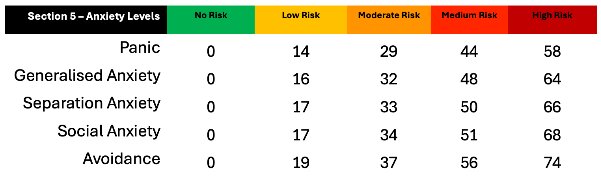
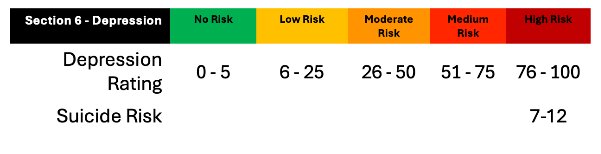


Understanding your results
Results are indicators of your current transaction with daily life. It is designed to help raise your awareness and take positive action. Risk indicators suggest potential severity and possible need for intervention.
No or Low Risk – your results indicate that you do not experience symptoms or behaviours that affect your daily life and are not likely to escalate.
Low Risk – your results indicate that you manage situations and challenges in such a way that you do not experience symptoms or behaviours that affect your daily life and are not likely to escalate.
Moderate Risk – your results suggest that you do experience symptoms and consequently corresponding behaviours that could escalate should they be ignored or enabled.
Medium Risk – your results show that you are a risk of consistent and repetitive levels of symptoms and suggests they have a bearing on daily life.
High Risk – your results show that you have a high risk of consistent and repetitive levels of symptoms and suggests they have a debilitating bearing on daily life.
Section 1 - Stress Levels
Understanding Stress
Stress triggers the “fight-or-flight” response, releasing cortisol and adrenaline that, when chronic, can cause severe health issues. It weakens the immune system, increases blood pressure, and boosts risk for heart disease, strokes, and diabetes. It also severely impacts mental health, causing anxiety, depression, and cognitive fatigue.
Key Factors
Stress presents itself in several ways and can vary from person to person. For example: Constant stress keeps blood pressure and heart rate high, leading to hypertension and a greater risk of heart attack or stroke. When chronic stress lowers immunity, making you more susceptible to infections, colds, and viruses. It is not unusual for stress to cause stomach pain, diarrhoea, constipation, and nausea. It can also worsen conditions like irritable bowel syndrome (IBS) and ulcers. Relaxing is a struggle – muscles remain tense, leading to headaches, neck pain, and jaw clenching. Skin conditions like hives or rashes can also flare up. It can lead to weight gain or loss, affect metabolism, and lower libido.
Emotional and cognitive stress leads to anxiety, depression, irritability, difficulty concentrating, and memory issues alongside severe fatigue and disrupted sleep patterns (insomnia or excessive sleep).
Behavioural Effects
Chronic stress often leads to unhealthy coping mechanisms, including overeating or loss of appetite, increased smoking, alcohol consumption, and reduced physical activity.
The test measures two types of Stress management – Active or Passive. If your Active score is higher than your Passive score, you probably have an Active stress personality; if the reverse is true, you probably have a Passive stress personality.
The test assesses if you have an active stress behaviour or a passive stress behaviour. The highest number indicates your Stress Dominance:
Active Stress behaviour is characterised by traits such as speed, impatience, aggressiveness and competitive drive and situations that require an instrumental, behavioural response to manage a perceived threat or challenge.
Characteristics include:
Evocative Situations – Examples include public speaking, job interviews, or complex mental tasks, which require active engagement to resolve.
Physiological Response – It triggers high sympathetic nervous system (SNS) arousal, characterised by increased heart rate, blood pressure, and cardiac output, along with increased blood flow to skeletal muscles to facilitate action.
Metabolic Mobilization – The body mobilises energy to devote to the task at hand.
Controlled Coping – It is associated with a perception that the stressor can be mitigated or eliminated through action.
Passive Stress behaviour often produces higher cardiovascular reactivity but is considered more functional because it involves an attempt to deal with the challenge. Passive stress is characterised by a “passive” response to environmental threats where the individual cannot directly control or influence the outcome, often leading to a focus on endurance rather than action.
Characteristics include:
Behavioural Response – Passive coping involves avoidance, withdrawal, and “freezing” or reduced exploration.
Physiological Response – Unlike active stress (which increases heart rate), passive stress is associated with higher blood pressure and total peripheral resistance with minimal cardiac response.
Hormonal Response – It is primarily mediated by increased activation of the hypothalamus-pituitary-adrenal resulting in higher cortisol levels.
Second-Hand Stress: -In social or work contexts, passive stress can refer to the emotional contagion of anxiety or stress from others.
Physical Stressors – In laboratory settings, it is often induced by tasks requiring endurance without control, such as limbs in cold water.
Passive vs. Active Coping:
Passive Coping – Relies on others to solve issues, involves wishful thinking, or involves avoiding the stressor.
Active Coping – Involves direct problem-solving, social support, and trying to change the situation.
Long-Term Effects
Individuals with moderate to high-risk scores for either Active or Passive behaviour will probably be feeling an excessive amount of personal stress and are likely to have higher than normal risk of experiencing ill-health.
Ongoing, unmanaged stress is linked to serious, long-term conditions, including:
- Heart disease and stroke.
- Diabetes.
- Mental health disorders (anxiety/depression).
- Premature cellular aging.
Section 2 - Self-Control
Understanding Self-Control
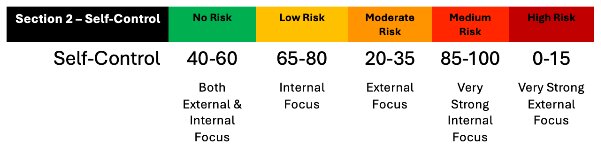
Self-control is a psychological concept referring to an individual’s belief system regarding the causes of events in their life and the degree to which they control them. The study and findings of which were originally studied and developed by Julian Rotter in 1954. Self-control is dependent on factors that determines whether people feel responsible for their own success/failure which is referred to as an internally managed sense of control. Alternatively, a belief that an externally managed sense of control – forces like luck, fate, or similar determines their destiny and outcomes.
Key Factors
In simplistic terms, People with highly developed internal control believe their pursuits and outcomes result from their own abilities, characteristics and efforts. Individuals believe they are responsible for their own destiny, leading to higher motivation, better coping strategies, and higher self-efficacy.
People with highly developed external control believe impersonal guiding forces such as luck, fate or a system is responsible for the level of their success and outcomes. Individuals believe their successes or failures are due to luck, chance, or others with power over them, which can lead to lower motivation and learned helplessness.
However, there are many variables, for example, an external focus can be beneficial in situations where a person has low competence or no control over the outcome, such as in a pandemic or when facing superior, uncontrollable opposition.
Childhood experiences, particularly how parents reward behaviour, play a crucial role. Consistent reward for effort builds an internal focus, while random rewards foster an external focus.
Behavioural Effects
Your test core indicates your Self Control type dominance:
Control of environment – Internals tend to enjoy high moral development. People believe they have the power to change their environment and that their efforts are not futile. High internal focus is strongly correlated with pro-active behaviours, such as being environmentally aware, engaging in advocacy for policy changes and participate in community efforts. However, it can lead to negative outcomes when overextended, including excessive self-blame, burnout, and extreme guilt for failures, as individuals feel entirely responsible for uncontrollable events. It may lead to ignoring systemic factors in favour of personal blame and difficulty delegating in work settings.
Externals tend to feel they have less power over their surroundings, this perspective may result in believing that personal action is useless unless others also take part, often leading to reduced engagement. It can result in passive acceptance of environmental situations or a belief that the world is too complex to influence. This often leads to significant negative issues including severe learned helplessness, reduced motivation, high anxiety, and increased vulnerability to depression. Individuals may fail to take initiative, neglect self-care, and feel paralysed by environmental challenges.
Ability to influence others – The mindset of Internals is often synonymous with self-agency and high self-efficacy, enables them to influence others and their environment. They take initiative, act confidently, and take responsibility, which inspires trust and encourages people around them to follow suit. Internals are better able to resist social influence, conformity, and obedience to authority. They tend to stick to their own standards rather than blindly following others. Internals believe they can overcome obstacles, and therefore, they exhibit high resilience and problem-solving attitude in the face of challenges.
A very strong internal focus can lead to taking on excessive responsibility, potentially leading to burnout or appearing overbearing. If not managed properly, this high sense of self-belief can be perceived as arrogance, which can hinder the ability to influence others positively.
On the surface, Externals have a lower, more indirect ability to influence others compared to those with internal focus. However, this does not mean they have no influence; rather, their influence tends to manifest through different mechanisms, such as collaboration, empathy, and working within established systems rather than trying to overpower them. Individuals with an external focus are more likely to conform to social pressures or obey authority, which can limit their personal power to lead, but may make them effective at encouraging compliance to group norms.
If not managed, an external mindset can lead to a sense of helplessness or a belief that their actions won’t make a difference, which can severely hinder their ability to take the lead or persuade others to adopt new, challenging initiatives.
Motivation and achievement – An internal focus, where individuals believe their actions directly determine outcomes, drives high motivation and achievement by fostering a belief that effort leads to success. Internals are proactive, set personal goals, and demonstrate higher resilience and self-efficacy, resulting in better academic and career performance. Because they believe in their ability to influence results, they are better at overcoming obstacles and managing stress. They attribute success to their ability and effort, and failures to a lack of effort, motivating them to work harder next time.
External focus leads to lower intrinsic motivation, reduced persistence, and lower academic or professional achievement. Individuals with this orientation often feel a lack of agency, which can cause them to put in less effort. When individuals believe their efforts do not directly influence results, they are less likely to initiate action or persevere through challenges. Externalizers may display lower levels of effort, lower interest in training, and higher rates of procrastination.
Long-Term Effects
The wide body of research on self-control suggests that individuals who generally believe they have the ability to control their own environments are more likely to be aware of actions and information that will help them achieve their successes. They tend to work towards improving their situations and to place higher value on their own skills.
The dial between internal focus and external focus is not fixed, it can move in either direction. We can re-frame and re-programme pathways of the brain using cognitive techniques that utilises neuroplasticity – the brain’s remarkable ability to reorganise its structure, functions, and neural connections in response.
Section 3 - Conflict
Understanding Conflict
In life its necessary to manage relationships, and, in most instances, people generally do not face issues very often, and a balanced emotional state is maintained from day to day. However, when faced with challenges and obstacles with relationships, be it, personal, work or professionals, a person’s behavioural approach has a significant impact on outcomes. Behavioural approaches were coined by Thomas-Kilman who identified conflict in five styles based on assertiveness and cooperativeness.
Key Factors
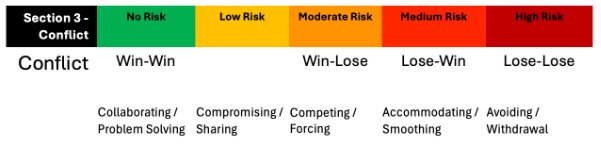
Depending on how important or not important someone applies to the need to be assertive, and cooperative enables the ability to assess your conflict style. Many professionals have adopted and adapted this model for the purposes of recruitment, relationship management and team building and can be easily understood as a matrix from win-win to lose-lose.
Style Characteristics
Competing (Shark) – Assertive and uncooperative; pursues own concerns at the expense of others. (Win/Lose)
Collaborating (Owl) – Assertive and cooperative; works with others to find a win-win solution that satisfies all. (Win/Win)
Compromising (Fox) – Moderate in both; seeks a middle-ground or quick, mutually acceptable solution. (Lose/Lose)
Avoiding (Turtle) – Unassertive and uncooperative; sidesteps, ignores, or postpones dealing with the conflict. (Lose/Lose)
Accommodating (Teddy Bear) – Unassertive and cooperative; neglects own concerns to satisfy the other party. (Lose/Win)
Behavioural Effects
The test score with the highest number indicates your conflict dominance:
Competing/Forcing – People who manage conflict with competing and forcing characteristics utilise an assertive and uncooperative, “win-lose” approach to disagreements. They prioritize their own goals, needs, or opinions over those of others, often utilizing power, authority, or intimidation to secure their desired outcome. This style is characterised by direct, unyielding, and sometimes aggressive behaviour, often described as a “my way or the highway” approach.
Collaborating/Problem Solving – People who manage conflict using collaboration and problem-solving (often referred to as a “win-win” approach) are characterised by a high degree of both assertiveness and cooperation. They view conflict as a natural, neutral, or even positive opportunity to strengthen relationships and find creative, long-term solutions that satisfy all parties involved.
Compromising/Sharing – People who manage conflict using Compromising (sometimes referred to as sharing) focus on finding a mutually acceptable, intermediate solution that partially satisfies both parties. This approach is often characterized as a “lose-lose” or “split the difference” method, where both sides make concessions to reach an agreement quickly.
Avoiding/Withdrawal – People who manage conflict using avoidance and withdrawal (often referred to as “avoiders” or “fighter’s”) typically adopt a passive or unassertive approach, prioritising the preservation of peace—or their own emotional safety—over direct resolution. They tend to view conflict as inherently destructive, uncomfortable, or futile, leading them to shy away from confrontational situations.
Accommodating/Smoothing – People who manage conflict using accommodating and smoothing conflict resolution style prioritises maintaining harmony and relationships over personal interests, often by yielding to others’ needs. It involves downplaying differences, emphasising areas of agreement, and providing temporary, low-cost solutions to keep the peace.
Long-Term Effects
Long-term effects of conflict styles depend heavily on whether the approach is constructive (collaboration) or destructive (avoidance, competition, accommodation). While short-term, these styles impact daily mood, long-term they fundamentally shape relationship quality, personal health, and organisational productivity, often leading to a repetition of unresolved patterns.
Section 4 - Ability to Cope
Understanding Coping strategies
Coping strategies are techniques to manage stress, anxiety, and difficult emotions. Key approaches involve addressing problems directly, managing emotions, and using distractions to reduce distress. People approach challenges using cognitive prioritisation and depending on the focus, depends on a person’s effectiveness to cope.
Key Factors
Coping and problem-solving are strategies used to manage stress and difficult situations. Problem-focused coping directly addresses the root cause of stress through planning and action. Emotional-focused coping manages the emotional response when situations are uncontrollable. Effective approaches include defining the problem, generating solutions, and seeking support.
Behavioural Effects
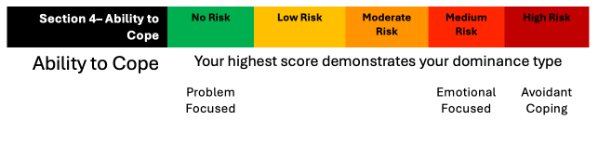
Your test score indicates your coping type dominance:
Problem-Focused Coping – Characterised by the facets of active coping, use of informational support, planning, and positive reframing. If a person leans towards problem-focused coping strategies, then focus is aimed at changing the stressful situation. This leaning indicative psychological strength, grit, a practical approach to problem solving and is predictive of positive outcomes.
Emotion-Focused Coping – Characterised by the facets of venting, use of emotional support, humour, acceptance, self-blame, and religion. Emotional-focused coping strategies prioritise the need to regulate emotions associated with the stressful situation.
Avoidant Coping – Characterised by the facets of self-distraction, denial, substance use, and behavioural disengagement. Avoidant coping in an indicator of physical or cognitive efforts to disengage from the stressor. Mild avoidance is typically indicative of adaptive coping.
Long-Term Effects
Long-term inability to cope with life leads to severe mental, emotional exhaustion, often resulting in burnout, anxiety, depression, and corresponding physical effects. Unhealthy behaviours can lead to a dysfunctional life, weakened immunity, and relationship breakdown, and emotional numbness. Learning to cope effectively with life can divert long term issues such as anxiety disorders, depression and a collapse of a functioning life.
Section 5 – Anxiety Type
Understanding Anxiety
Simplistically anxiety is fear of the unknown. It is a state of high alert but without a tangible situation or trigger that can be rationalised. The physiological response causes mild to extremely debilitating reactions and therefore impacts daily life in very intrusive ways.
Key Factors
Anxiety serves a positive, protective purpose by acting as an internal alarm system that increases alertness, boosts motivation, and enhances performance in challenging situations. It prepares the body for action, improves focus on critical tasks, and drives goal-oriented behaviour, acting as a “good stress” that helps manage potential dangers and improve daily efficiency.
However, when the scales tip in the opposite direction the causality for anxiety disorders can be attributed to numerous reasons and is usually rooted back to a trigger event, “evidence” that thereafter requires your nervous system to warn and protect you without ever turning off. Left unmanaged the nervous system escalates the condition with both emotional and physiological symptoms, which further provides evidence.
Behavioural Effects
Your score may indication you have one or more types of anxiety. Anxiety only has a high risk of impacting daily life if left unattended.
Anxiety is a very manageable condition – with support in most instances anxiety can be eliminated from dominating your life.
Panic Disorder Interpretation – Panic-disorder is a mental health condition characterised by recurrent, unexpected panic attacks—intense, sudden fear with physical symptoms. It causes persistent worry of impending doom, fear of losing control, or fear of dying. Attacks typically peak within minutes, causing severe distress such as pounding heart rate, palpitations, sweating, trembling, shaking, shortness of breath, chest pain, nausea, dizziness, light-headedness’, hot flashes, or chills and in some instances feelings of unreality/detachment.
GAD Interpretation – Generalised Anxiety Disorder (GAD) is a long-term, chronic condition causing excessive, uncontrollable, and often irrational worry about everyday issues for more than six months. Key symptoms include Irritability, restlessness, feeling “on edge,” difficulty concentrating, and mind going blank, restlessness, fatigue, muscle tension and sleep disruption. It is caused by a mix of genetics, environmental factors, history of trauma, abuse, bullying, or prolonged, stressful life events, stress, often interfering with daily life.
Separation Anxiety Interpretation – Separation anxiety disorder is a mental health condition characterised by prolonged excessive, developmentally inappropriate fear or anxiety regarding separation from home or attachment to key people in life. Symptoms include being beyond normal clinginess, individuals may experience panic attacks, persistent worry about loss or rejection, fear of being alone, and excessive distress when anticipating separation. Triggers include life stressors such as moving house or job, divorce, the death of a loved one, or even death of a pet. Genetics, shy temperaments, having overprotective parents can also play a role.
Social Anxiety Interpretation – Social anxiety disorder is a chronic mental health condition characterised by an intense, persistent fear of being watched, judged, or humiliated in social situations. It causes significant distress, often leading to avoidance of everyday activities like speaking up, eating in front of others, or coming into contact with strangers. Symptoms, which typically start in the teenage years, include intense, irrational fear of social situations, fear of embarrassing oneself, and physical manifestations like blushing, sweating, trembling, or a rapid heart rate.
Avoidance Interpretation – An avoidance disorder typically refers to Avoidant Personality Disorder (AVPD), a mental health condition marked by intense fear of rejection, criticism, and disapproval, leading to pervasive social avoidance and feelings of inadequacy, even though individuals often desire social connection, they may experience difficulty forming relationships. Symptoms include extreme shyness, feeling socially inept, strong fear of criticism, low self-esteem, and avoidance of social or occupational activities involving significant contact with others.
Long-Term Effects
Long-term, untreated anxiety causes significant physical and mental health issues, including chronic cardiovascular strain (hypertension, heart attack, stroke), immune system suppression, and, in many cases, depression or substance abuse disorders. It causes chronic pain, muscle tension, cognitive decline (memory loss), and severe social withdrawal.
Section 6 - Depression
Understanding Depression
Depression is a common, serious, and treatable mental health condition characterised by persistent, intense sadness or loss of interest in life for at least two weeks. It is not a sign of weakness or a temporary bad mood, but a real illness requiring intervention. Symptoms include feeling beyond sadness, hopelessness, worthlessness, irritability, fatigue, loss of interest in activities (anhedonia), changes in sleep (too much or too little) and appetite, poor concentration, and suicidal thoughts.
Key Factors
Depressions is the results from a complex interaction of genetic, biological, environmental, and psychological factors. Major Depressive Disorder (clinical depression) is common, but others include Persistent Depressive Disorder, Bipolar Disorder, and Postpartum Depression. It is not something you can “snap out of” rather it a condition to work through with support and invariably persists without intervention.
Behavioural Effects
Your score indicates your level of depression. If you score highly, do not ignore this, depression is a condition that needs intervention. There are many very effective ways to work through depression aside from medication.
Mild Depression Interpretation – Mild depression often involves feeling “down in the dumps,” discouraged, or having reduced energy. Common indicators include occasional tearfulness, mild sleep disturbances, reduced motivation, or feeling mildly overwhelmed. Addressing sleep hygiene, nutrition, and exercise can improve mood. Over time it is common for mild symptoms to resolve.
Moderate Depression Interpretation – Individuals often experience feelings of sadness, low self-esteem, hopelessness, and guilt. Common indicators include loss of interest in hobbies or work, difficulty making decisions, and disruptions in sleep or appetite. Addressing lifestyle choices, keeping routines and exercise can improve mood alongside light touch intervention can prevent progression to severe depression.
Severe Depression Interpretation – Severe depression is usually indicated by a high burden of symptoms across multiple domains. The risks of severe depression include planning for self-harm behind which people experience intense, persistent sadness, hopelessness, worthlessness, extreme guilt, complete loss of pleasure (anhedonia), significant sleep disturbance, and inability to function in daily life due to loss of motivation.
Extreme Depression Indicators – Extreme Depression is a state of constant feelings of extreme hopelessness, overwhelming sadness, and feeling as though life is completely unbearable. The experience of total loss of interest in life/work, extreme fatigue, severe sleep disturbances (too much or too little), and likely feeling suicidal urges or planning suicide. Due to almost entirely distorted by negative cognitive distortions it is disabling and therefore people do not have the ability to seek help.
Clinical Depression – If a person is experiencing severe or extreme depression it is likely to be clinical depression and therefore should be diagnosed by a medical professional. Severe symptoms should be immediately addressed by a specialist due to the potential risk to well-being and the significant impairment in social, work, and personal life.
Types of clinical depression diagnosis includes Major Depressive Disorder (severe, 2+ weeks), Persistent Depressive Disorder (chronic, 2+ years), Bipolar Disorder (fluctuating mania/depression), Seasonal Affective Disorder (SAD), and perinatal/postpartum depression. Other types include psychotic depression, atypical, and Premenstrual Dysphoric Disorder (PMDD).
Long-Term Effects
Long term effects of depression regardless of type affects not just the sufferer but the people in their life. Usually there is a breakdown of family, social, and romantic relationships. Chronic depression renders a person unable to work, resulting in career loss or financial instability. There is a risk of developing persistent depression that is resistant to treatment and increases the likelihood of self-medicating with drugs or alcohol. Self-harm and suicide are always a concern for the people who live with the sufferer and their professional support. Therefore, early intervention is essential as research shows persistent and reoccurring depression can be avoided.
Section 7 - Fear and Phobia
Understanding Fear and Phobia
Fear is a natural, short-lived emotional response to a real or perceived threat, while a phobia is fear of an intense, irrational, and debilitating fear of specific objects, situations, or feelings. Phobias cause extreme anxiety, often leading to avoidance behaviour that impacts daily life, and are considered a type of anxiety disorder. The effect of a persistent fear/phobia can be very similar to trauma.
Key Factors
Phobias are intense, irrational, and debilitating fears of specific objects, situations, or activities that are disproportionate to the actual danger. Affecting roughly 9-12% of adults, they often stem from childhood traumas or learned behaviours, causing severe physical symptoms like panic attacks, sweating, and avoidance.
Behavioural Effects
This section of the test measures your specific and repetitive fear levels – often referred to as a phobia. Fear is a natural experience of life and can be processed safely and effectively until it is no longer a repetitive issue in daily life.
Overwhelming fear/phobia causes overwhelming anxiety and in almost all cases causes people to organise their lives around avoidance. Individuals may go to extreme lengths to avoid the trigger, limiting daily activities, job choices, and social opportunities. Exposure to the source (or sometimes just thinking about it) can trigger panic attacks, nausea, sweating, trembling, and chest pain.
Severe phobias can lead to isolation, low mood, and depression. Avoiding the feared object or situation reinforces the fear, making it stronger over time.
Long-Term Effects
Long-term, chronic fear or untreated phobias can severely restrict daily life, causing
social isolation, depression, and significant anxiety disorders. Physically, they are linked to chronic pain, cardiovascular issues (high blood pressure, heart disease), weakened immunity, and gastrointestinal problems. Cognitive impairment, memory issues, and permanent lifestyle limitations are also common. Exposure therapy is the most effective treatment, as well as similar techniques used to treat trauma.
Section 8 - Trauma
Understanding Trauma
Trauma is subjective; what is traumatizing to one person may not be to another. Risk factors that make an individual more susceptible to developing trauma-related conditions – such as PTSD and CPTSD – include lack of support systems, prior history of mental health struggles, and the intensity of an event. Trauma can happen at any time of life from childhood to old age and no matter when trauma occurs it is equally devastating.
Key Factors
Trauma is a response to an overwhelming experience often out of a person’s control such as:
Violence and Abuse: Physical, sexual, or emotional abuse, childhood neglect, domestic violence, bullying, or acts of terrorism.
Accidents and Injuries – Serious car crashes, falls, or, in medical contexts, traumatic brain injuries.
Disasters and Emergencies – Natural disasters (floods, earthquakes) or human-made disasters like fire.
Medical Trauma – Traumatic childbirth, painful or unexpected medical procedures, or receiving a life-threatening diagnosis.
Loss and Grief – Sudden death of a loved one, especially if traumatic (e.g., suicide or violent, unexpected death).
Exposure to Danger/War – Combat exposure, being a refugee, being kidnapped, or witnessing violence.
Chronic Stress/Ongoing Situations – Living in a dangerous environment, systemic discrimination, or ongoing neglect.
Behavioural Effects
Trauma is perhaps one of the most impactful regarding the way we shape our understanding of the world. Working through Trauma is one of the most uncomfortable processes of all, it is also the only way to free yourself from its negative effects.
Active trauma symptoms include intrusive re-experiencing (vivid flashbacks, nightmares and repetitive, distressing images or physical sensations of the event), high anxiety/hypervigilance (jumpiness, being on guard), avoidance of triggers, emotional numbness, and physical reactions like racing heart or chronic fatigue. Behavioural changes often include irritability, social withdrawal, or self-destructive actions, being constantly “on guard,” jumpy, easily startled, irritable, having angry outbursts, or struggling to focus.
Daily normal activities can also be significantly interrupted due to trauma such as avoiding people, places, or thoughts related to the trauma, and feeling emotionally numb or detached.
Sometimes there is difficulty remembering key parts of the event, distorted blame/guilt, negative beliefs about oneself or the world, and loss of interest in activities.
Long-Term Effects
Long-term effects of trauma include chronic mental health conditions (PTSD, depression, anxiety), severe emotional dysregulation, and altered brain function, such as persistent hypervigilance. It also leads to physical health issues, including chronic pain and disease, as well as behavioural struggles like substance abuse and relationship difficulties. The effects of trauma should be address immediately, processing the event is essential in order to conclude the effect of trauma.