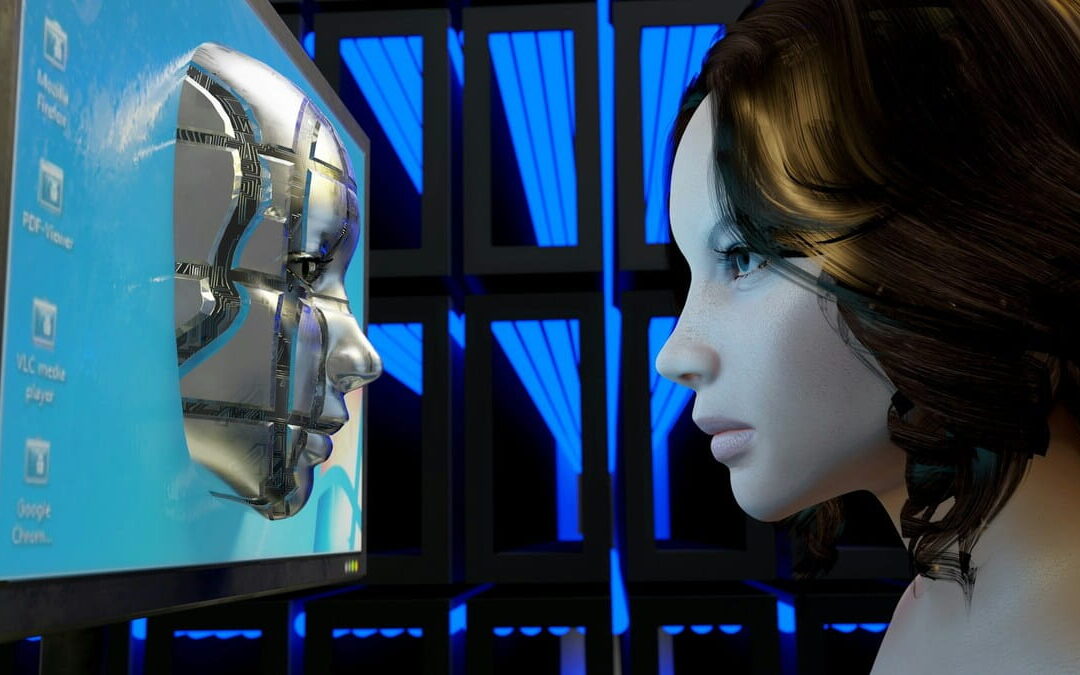
We humans are biologically programmed to connect, yet we live in a time where people have never been more isolated. Is it any wonder that artificial intelligence (Ai) is being replaced for its companionship and personal advice?
People are seeking emotional support, comfort and conversation and if they feel like they are not getting it from each other, Ai seems like a natural alternative. Research shows that in 2024 over one billion users of Ai spent 93 minutes a day seeking friendship from Ai.
What risks does this pose long term?
In infancy, responsive relationships that are warm, attuned to a child’s needs and responsive significantly shape the architecture of the brain. Harvard’s Centre on the Developing Child states that early rational experiences are the most powerful predictors of lifelong health, learning and resilience. Cognitive processes like reasoning, attention and memory are profoundly shaped by emotional and social experiences – without this the brain’s capacity is diminished, the opposite of which means that a growing brain is 12 times more likely to flourish, including learning new things.
In short, relationships and their significance shape the development of the brain, so if our relationships and by extension our identity, beliefs, behaviours are engineered by companies driven by profit and our attention, who are ultimately responsible for programming Ai for their gain, rather than the recipient’s well-being – what impact does this have on society collectively and each individual and their individualism and development?
We are hungry for connection, meaning, and care. But AI cannot love us back, it was never meant to raise our children, be our therapist or substitute the presence of real human connection.
A child’s brain forms approximately 1 million neural connections every second in their early years, shaped by the responsiveness of their caregivers, don’t outsource this to Ai.
Questions surrounding the risks and benefits of Ai replacing human connection has galvanised a global discussion. With over 970 million people living with mental disorders worldwide as well as a shortage of accessible support, treatment and safe places, vulnerable people risk being exposed to bias, inaccurate assessments and the perpetuation of stereotypes, hate, division and the exacerbation of differences. With human-like responses, Ai may lead to greater polarisation and extremism and a breakdown of social networks.
As a therapist, my experience working with clients has now a third factor – Ai and in some cases the malicious misuse of Ai to control and manipulate others. This concerns me greatly.
As the reader of this article, how much do you rely on Ai? Do you use it to aid you in business? Do you use it to aid you in finding information? Or do you use it to manage your relationship? Raise your children? Or make personal decisions?
Ai has an exceptional and very valid role in running a business, composing literary materials, exploring information, but if you use it to decide how to feel, how others should feel or shouldn’t feel or how others should treat you….my question to you is…. Why? Are you not able to know yourself? A better question is, how do you expect to know yourself if you outsource your ability to manage your emotions and process your feelings? In other words, take personal responsibility!
Don’t get me wrong, there is a place for Ai and I value it as much as the next person, but no one or thing should tell you how to feel or what emotion you should have. We must develop and always use the ability to think critically make our own choices and face the consequences when we get it wrong – or else we are not human.
About the writer
Jille Tringham has developed a therapeutic self -learn system called Thrive-Again that helps people address the root of any struggle — emotional, behavioural, or practical — by mastering the self beneath it.
“We all want to break free from the prison of their mind. I guide them to turn the struggles of their life experience into mental resilience, build a path to freedom and a fully realised life.”